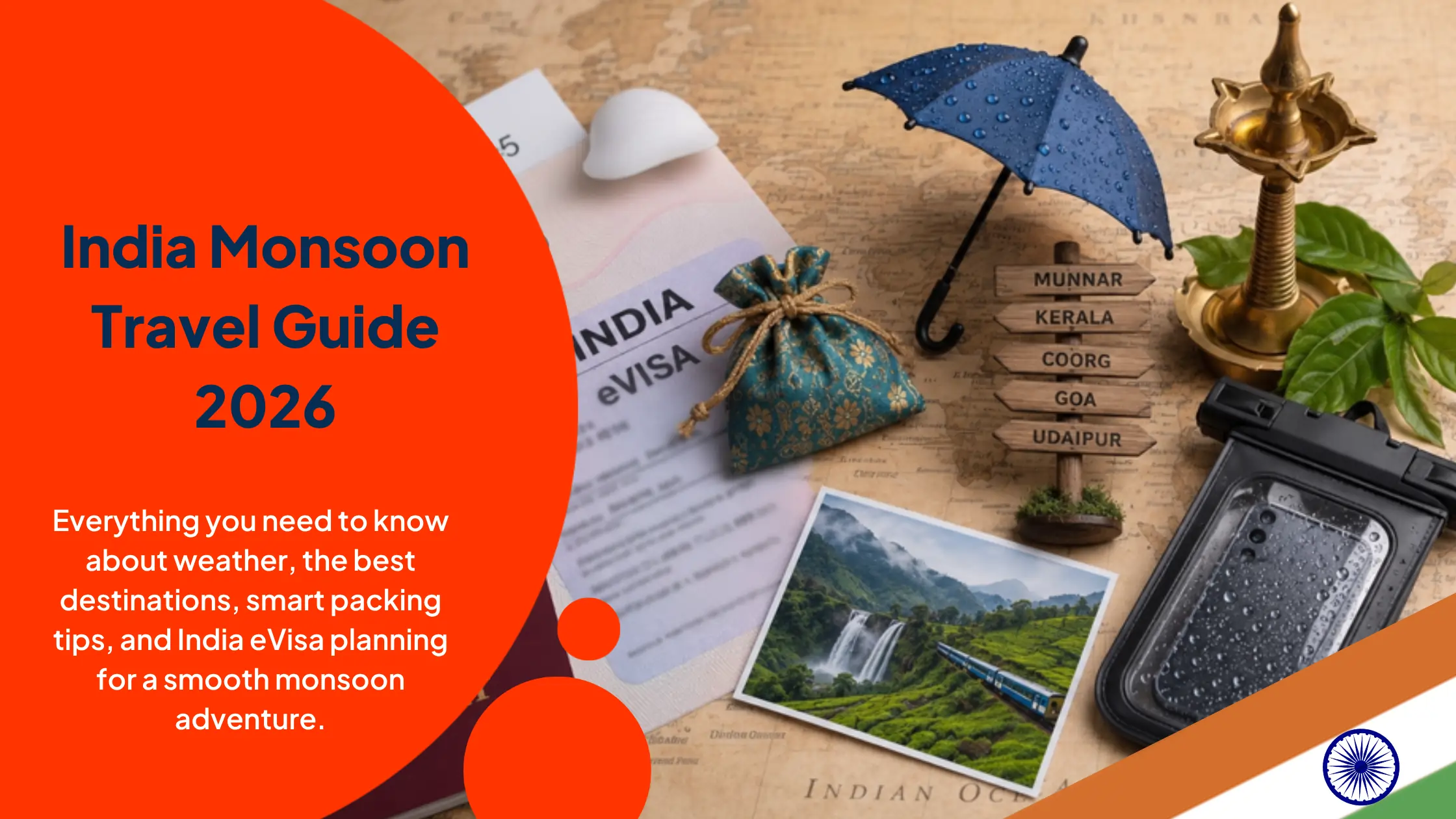
India Monsoon Travel Guide 2026: Best Places & eVisa Tips
India’s monsoon can turn ordinary landscapes into green hills, active waterfalls, and misty roads. If you are planning a visit, this India monsoon travel guide covers everything you need to know, from weather patterns to essential eVisa planning, ensuring you enjoy the season with less stress
“Read the India eVisa document requirements before submitting your form. Your name, passport number, nationality, and date of birth should exactly match your passport”
When Is the Monsoon Season in India?
The southwest monsoon normally begins over Kerala around early June and spreads across India during the following weeks. It usually affects most regions from June to September, although rain levels vary by state. In 2026, the monsoon reached Kerala on 4 June and covered the whole country on 9 July
Do not treat India as one weather zone. Mumbai may receive heavy rain while parts of Rajasthan stay much drier. Delhi, Goa, Kerala, the Western Ghats, the Himalayan states, and northeast India can experience different conditions during the same week. Check the latest regional forecast before each journey.
Is India Worth Visiting During the Monsoon?
Yes, especially if you enjoy green scenery, fewer crowds, and a slower travel experience. The season can be beautiful in Kerala, Goa, Karnataka, Maharashtra, Madhya Pradesh, and parts of northeast India
Best Places to Visit: India Monsoon Travel Guide Recommendations
Some regions come alive during the rains. These four destinations offer the best monsoon experience in 2026.
Kerala backwaters bring houseboats gliding through lush green canals while rain patters on the roof. Ayurveda treatments also work best during the monsoon, since the humidity opens pores and improves absorption.
Munnar hill station turns its tea gardens a deep emerald green, and waterfalls along the route run at full strength. Morning mist rolls through the valleys, creating postcard views.
Goa’s quiet season means thinner crowds and lower prices. Beaches stay calm, and the Arabian Sea puts on a dramatic show for storm watchers who keep a safe distance.
Udaipur’s lakes fill up fast. Monsoon fills Lake Pichola, and City Palace views turn sharper against the grey sky. Temples and gardens around the lake stay lush and green through August.
While drafting your itinerary using this India monsoon travel guide, avoid building a very tight schedule, as heavy rain may affect roads, flights, trains, ferries or outdoor activities. Keep extra time between connections and choose hotels with flexible cancellation policies.
What Should You Pack for India’s Monsoon?
Pack light, quick-drying clothes and carry a thin waterproof jacket or compact umbrella. Closed footwear with a good grip works better than smooth sandals on wet streets. Keep your passport, phone, medicines, and travel papers inside waterproof pouches.
A useful monsoon packing list includes:
- Quick-drying clothes, Waterproof footwear, Small umbrella or rain jacket, Mosquito repellent, Personal medicines, Power bank, Waterproof document pouch, Reusable water bottle, Extra socks, Copies of your passport and visa
Avoid heavy clothing that takes a long time to dry. Laundry services are easy to find in most cities, so a smaller bag usually works better.
India Monsoon Travel Guide: Planning Flights and Local Transport
Book important flights or trains with a reasonable time buffer. Avoid placing an international departure immediately after a long road trip from a hill station. Rain can slow traffic even when flights operate normally.
Keep digital and printed copies of bookings. Save your hotel address, driver number, and airline details offline. A local SIM or roaming plan can help when plans change.
Plan Your India eVisa Before Booking a Tight Itinerary
Most leisure visitors need the correct tourist eVisa to India before travelling. Check your passport, photo, and supporting documents carefully. The official India eVisa portal asks eligible applicants to apply at least 4 days before arrival, so do not leave the application until the week before your departure.
Some travellers search for a fast eVisa to India after making last-minute plans. When time is limited, an urgent eVisa to India service can help with application preparation and document review. Indian authorities still control the final decision and processing time.
We hope this India monsoon travel guide helps you experience the beauty of India’s green season with peace of mind
Frequently Asked Questions
Which months are best for travelling in India during the monsoon?
The Indian monsoon usually runs from June to September. July and August offer the greenest landscapes, while September often brings lighter rain and easier travel conditions.
Which months are best for visiting Kerala?
June to September is ideal for travellers who want rain, greenery and Ayurvedic wellness experiences. September to November suits visitors who prefer lower rainfall and easier outdoor travel.
Which places are best to visit in India during the monsoon?
Popular monsoon destinations include Kerala, Goa, Coorg, Munnar, Udaipur, Lonavala and Meghalaya. Check local forecasts before visiting coastal or hill regions.
Is it safe to travel in India during the monsoon?
Yes, with careful planning. Monitor weather alerts, avoid flooded roads, keep extra time between journeys, and stay flexible when visiting mountain or coastal destinations.